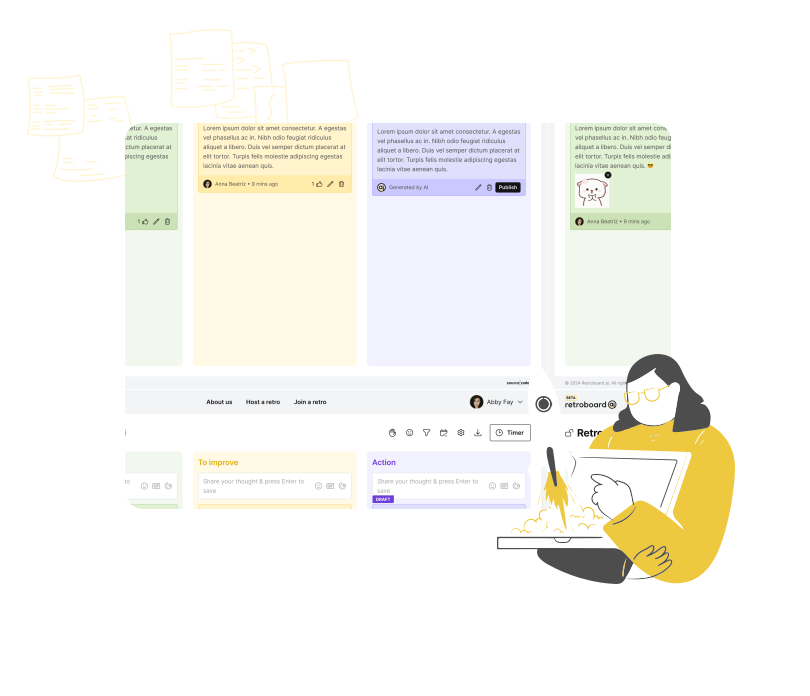
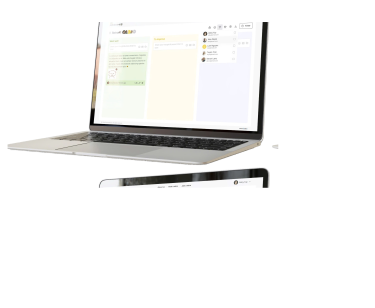
RetroBoard provides a structured and collaborative space for teams to reflect on sprints, identify improvements, and track action items efficiently.
Encourages honest feedback and open dialogue, promoting a culture of continuous improvement and team alignment in every iteration.
Designed to fit various Agile workflows, RetroBoard offers flexible templates, anonymity options, and seamless integration with common project tools.
![source[code]](/_next/image?url=https%3A%2F%2Fd1dbxddn33rp8i.cloudfront.net%2F%2Fimage_111_80b8008d0c.png&w=750&q=75)
Purpose-Built for Agile Teams
Designed to streamline retrospectives and agile ceremonies with minimal setup and maximum clarity.
Secure & Scalable for Enterprises
Enterprise-grade security and scalability to support large, cross-functional teams across regions.
Data-Driven Feedback Loop
Track team performance and engagement trends over time with built-in analytics and feedback metrics.
Seamless Integration
Works effortlessly with tools like Jira, Confluence, and Slack to fit within existing development workflows.
Customizable to Team Needs
Flexible templates and board settings allow teams to tailor retrospectives to their culture and sprint rhythm
Partner with source[code] to turn your idea into a scalable, secure solution—backed by expert teams and proven delivery.
RetroBoard helps teams close each sprint with purpose. It creates space for real conversations, surfaces issues early, and turns feedback into action. Whether you’re running internal retros or client project reviews, RetroBoard makes reflection a habit that actually drives improvement.
If your retros feel like a chore or rarely lead to action, RetroBoard is built to change that.
![source[code]](/_next/image?url=https%3A%2F%2Fd1dbxddn33rp8i.cloudfront.net%2F%2F61983ebc92f524acd54019abb7f957526fecdbb3_c1bbd73f58.jpg&w=3840&q=75)
Step 1
Spotting the Friction
Our teams struggled with scattered retro notes and unclear follow-ups—especially across time zones.
Step 2
Designing for Real Teams
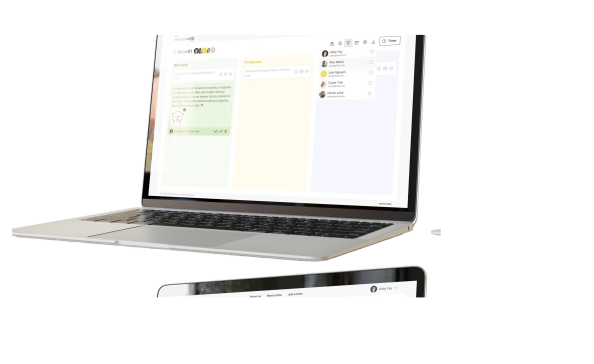
We mapped out a clean, intuitive interface with templates like Start/Stop/Continue and Mad/Sad/Glad.
Step 3
Building the MVP
In just a few sprints, we shipped a working version with anonymous feedback, voting, and action items.
Step 4
Testing with Our Squads
We ran retros using RetroBoard across multiple teams and refined UX based on live feedback.
Step 5
Iterating Toward Impact
We added sprint tracking, reminders, and export features—turning retrospectives into real team improvement tools.