The Future of AI in Insurance: Why AI-Augmented Trust Will Define the Next Decade
As artificial intelligence reshapes insurance distribution, the industry's biggest challenge may not be technology adoption - but redefining trust in an era where information is no longer scarce.
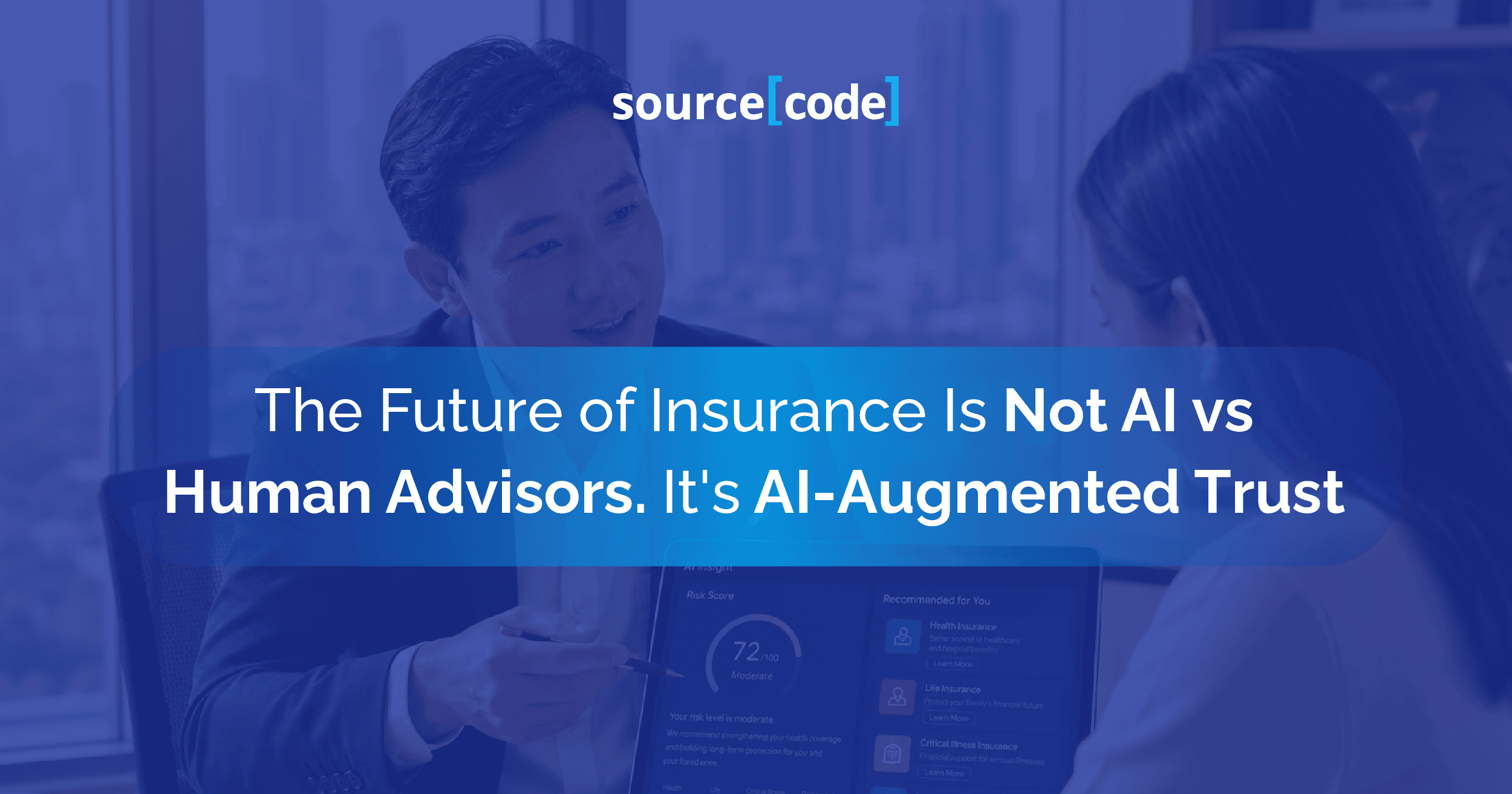
Artificial intelligence is rapidly becoming one of the most consequential forces shaping the future of insurance. Across Australia and the broader Asia-Pacific region, insurers are accelerating investments in underwriting automation, claims intelligence, fraud detection, customer engagement platforms, and generative AI capabilities. The scale of the opportunity is difficult to ignore. According to Accenture, artificial intelligence could unlock more than US$1.1 trillion in annual value across the global insurance industry through improvements in productivity, operational efficiency, and customer experience.
Yet beneath the excitement lies a more uncomfortable reality.
While investment in AI continues to grow, organisational readiness remains uneven. Recent industry research found that only 28% of insurers across APAC believe they are fully prepared to leverage generative AI capabilities at scale. The gap between technological ambition and operational preparedness remains significant, particularly as customer expectations continue to evolve faster than many organisations can adapt.
Most conversations about AI in insurance still revolve around efficiency. How many processes can be automated? How much cost can be removed? Which tasks can be delegated to intelligent systems?
These are important questions. But they are increasingly distracting the industry from a more fundamental shift taking place beneath the surface. The real challenge facing insurers is not whether AI can replace advisors. It is whether the traditional advisory model can remain relevant when customers no longer depend on advisors for information.
The End of Information Asymmetry
For decades, insurance advisory has been built on information asymmetry. Advisors possessed expertise that customers lacked. They understood product structures, policy wording, underwriting requirements, exclusions, and risk considerations that were often difficult for the average consumer to navigate independently. Their value was not simply in recommending products, but in helping customers make sense of complexity. That dynamic is changing rapidly.
Customers today have access to comparison platforms, educational resources, financial content, online communities, and increasingly sophisticated AI-powered tools capable of analysing information in seconds. Tasks that once required direct advisor involvement are becoming increasingly self-service.
According to McKinsey, generative AI has the potential to automate activities that currently consume 60-70% of employees' time across industries, while Deloitte identifies claims processing as one of the insurance functions most likely to benefit from AI-driven efficiency gains and workforce productivity improvements. Together, these trends highlight not only the scale of the opportunity, but also the speed at which traditional insurance workflows are being reshaped. And the implications extend far beyond operational improvement.
As information becomes more accessible, the traditional source of advisory value begins to erode. Yet contrary to many predictions, this does not signal the decline of the advisor. If anything, it highlights a growing need for the aspects of advisory that technology cannot easily replicate.
**“Customers have never truly paid for information. They have paid for confidence.” **
Insurance decisions are rarely made in purely rational terms. Purchasing life insurance, income protection, health cover, or business protection involves uncertainty about the future. Customers are making decisions about family security, financial resilience, retirement planning, and risk exposure. These decisions often involve competing priorities, incomplete information, and deeply personal circumstances.
Artificial intelligence can analyze risks. It can compare products, identify patterns, generate recommendations, and process vast amounts of information with extraordinary speed. What it cannot easily do is help customers interpret what those recommendations mean within the context of their lives. And that distinction matters more than many insurers realize.
Why Trust Is Becoming Insurance's Most Valuable Asset
Customer expectations are changing alongside technological capabilities. According to Salesforce, more than 70% of consumers expect personalized interactions from financial service providers. In fact, 62% would consider switching providers if they felt they were being treated as a number rather than a valued customer. At the same time, PwC continues to identify customer experience as one of the strongest drivers of purchasing decisions across financial services. Taken together, these findings point to a significant shift.
Customers are no longer comparing insurers solely on products and prices. They are increasingly evaluating the quality of guidance, relevance of recommendations, transparency of decisions, and overall experience delivered throughout the relationship.
In this environment, trust is becoming a strategic differentiator. Technology capabilities will inevitably become more accessible across the industry. Trust will not. This may ultimately prove to be the defining paradox of the AI era. The more technology becomes embedded within insurance decision-making, the more valuable human accountability becomes. Recent industry surveys reveal that despite significant investment in autonomous AI capabilities, only 4% of insurers fully trust AI agents to make decisions without human oversight. Even organisations leading AI adoption recognize that responsibility cannot be delegated entirely to algorithms.
Customers may be comfortable receiving AI-generated recommendations. They are far less comfortable when there is no clear accountability behind those recommendations. This creates a challenge for insurers that extends far beyond technology deployment. Success will no longer depend solely on building smarter models or automating more workflows. It will depend on whether organisations can deploy AI in ways that strengthen transparency, fairness, accountability, and customer confidence.
**“Trust is no longer a soft metric. It is becoming a strategic asset” **
The Rise of AI-Augmented Trust
Much of the public discussion surrounding artificial intelligence tends to frame the future as a contest between technology and human expertise. The reality is likely to be very different. The most successful insurers are unlikely to be those that replace human expertise with AI. They will be those that use AI to amplify human expertise, strengthen decision-making, and create more meaningful customer interactions.
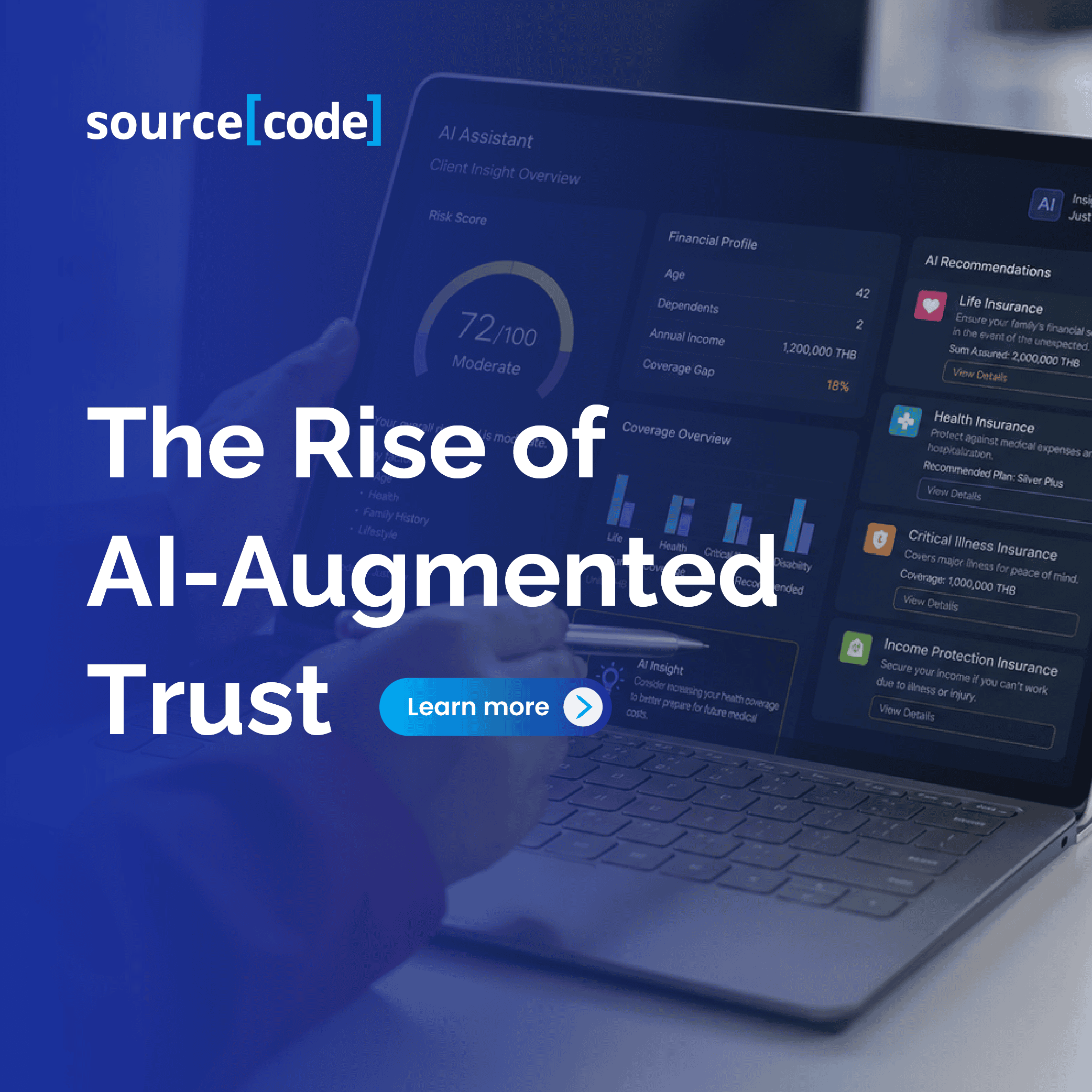
Imagine an advisor entering every customer conversation supported by predictive risk intelligence, AI-generated customer insights, real-time policy comparisons, personalized recommendations, automated documentation, and intelligent compliance support. The advisor becomes more informed, more efficient, more prepared, and more valuable. Importantly, the customer still benefits from human interpretation, empathy, accountability, and judgment. Technology handles information, humans provide context; Technology accelerates analysis, humans create confidence; Technology enhances efficiency, humans remain accountable. This is the essence of AI-augmented trust. It represents a future where technology strengthens the advisory relationship rather than replacing it.
For insurers, this distinction is critical. AI should not simply be viewed as an efficiency tool. It should be viewed as an enabler of better decisions, stronger relationships, and more personalized customer experiences. The organisations that understand this will be significantly better positioned than those that continue viewing AI primarily through the lens of cost reduction.
From Life Planner to Life Guardian: What Insurance Leaders Should Do Next
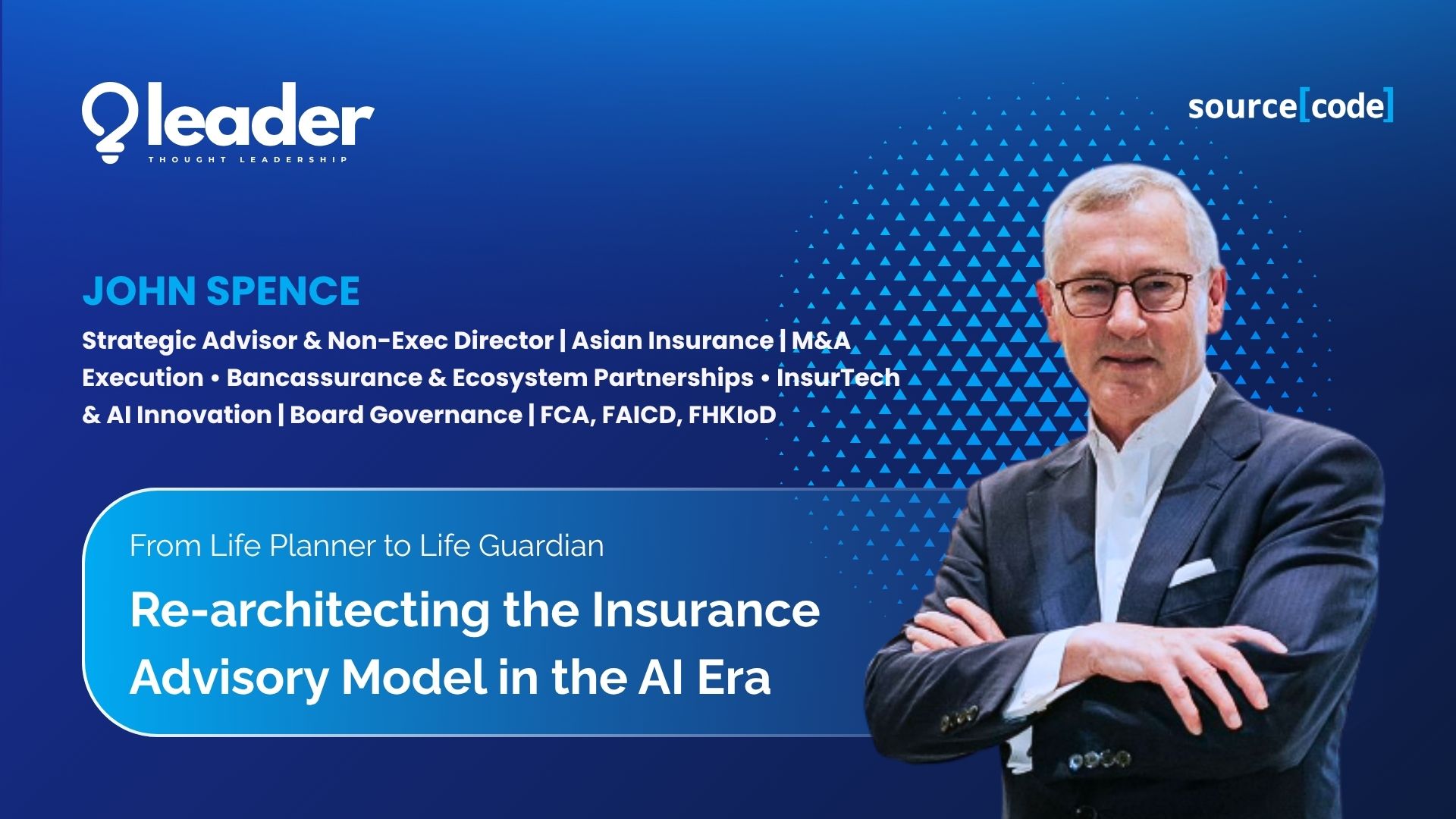
During a recent Thought Leadership Series conversation hosted by sourceCode, insurance strategist John Spence described the future advisor as less of a "life planner" and more of a "life guardian." That shift in language reflects a broader transformation underway, one that is redefining the role of advisors in an increasingly AI-driven world.
Historically, advisors have been trained around products. Future advisors will increasingly be valued for their ability to help customers navigate complexity. As AI assumes responsibility for more administrative and analytical tasks, advisors will spend less time processing information and more time helping customers interpret it. Less time explaining products and more time clarifying consequences. Less time selling and more time building confidence. In many ways, AI is not reducing the importance of advisors. It is elevating the parts of the role that matter most.
For insurers across Australia and the broader Asia-Pacific region, this evolution carries significant strategic implications. IDC forecasts that AI spending across APAC will continue to grow rapidly in the coming years as organizations invest in automation, customer experience transformation, analytics, and decision intelligence.
Yet technology investment alone will not create sustainable differentiation. Most insurers will eventually gain access to similar AI capabilities. Competitive advantages will increasingly come from how effectively those capabilities are integrated into customer relationships. The leaders of the next decade will not simply be the insurers with the most advanced AI models. They will be the organisations that combine technological intelligence with human judgment, transparency, and accountability. They will redesign advisory models around outcomes rather than products. They will embed responsible AI principles into customer-facing experiences. They will invest in both technology capabilities and human capabilities. Most importantly, they will recognize that the future of insurance is not a choice between artificial intelligence and human expertise. It is a strategy for combining both.
Conclusion
Artificial intelligence will undoubtedly transform insurance. It will improve underwriting, streamline claims processing, accelerate decision-making, personalise customer experiences, and unlock significant operational efficiencies. Those outcomes are increasingly inevitable.
What remains uncertain is how organisations choose to position human expertise within that future. The insurers that thrive over the next decade will not be those that ask how AI can replace advisors. They will be those that ask how AI can make advisors more valuable. Because as information becomes increasingly abundant, trust becomes increasingly scarce. And in an industry built on promises, trust remains the most valuable asset of all. “The future of insurance is not AI versus human advisors. It is an AI-augmented trust.”
Key Takeaways for Insurance Leaders
- AI could unlock more than US$1.1 trillion in annual value across the global insurance industry.
- Only 28% of APAC insurers believe they are fully prepared to scale generative AI initiatives.
- More than 70% of customers expect personalized interactions from financial service providers.
- Only 4% of insurers fully trust autonomous AI agents without human oversight.
- Trust, transparency, and accountability are becoming critical competitive differentiators.
- The future of insurance lies not in replacing human expertise, but in augmenting it through AI.
About sourceCode
sourceCode partners with leading insurers, banks, and financial services organisations to design, build, and scale AI-powered digital solutions. From intelligent automation and customer experience transformation to advanced analytics and responsible AI implementation, we help organisations unlock business value while keeping human expertise at the center of decision-making.
Contact us to discover how sourceCode helps insurers design AI-powered customer experiences that strengthen trust, not replace it.